Showing posts with label Politics. Show all posts

Wednesday, May 1, 2013

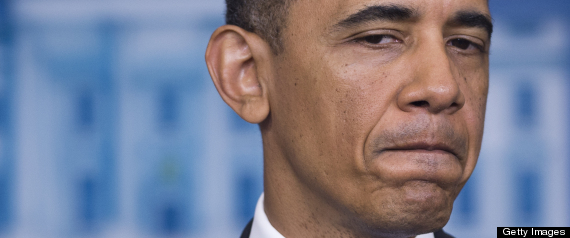
President Obama At Press Conference: In Charge, But Not In Control

U.S. President Barack Obama holds a press conference in the Brady Press Briefing Room of the White House in Washington, DC, on April 30, 2013. (SAUL LOEB/AFP/Getty Images)

TIME:

After the first 100 days of his second term, President Obama just can’t stop talking about the limits of his own power.

Read the whole story at TIME

Sunday, April 28, 2013

WATCH: President Obama Brings the Laughs at White House Correspondents’ Dinner

On Saturday night, Hollywood and Washington notables gathered for the annual White House Correspondents’ Dinner in DC. Though recently touted as “nerd prom,” the affair has become a yearly excuse for the press to poke fun at Washington, for Washington to poke fun at the press and for everyone to poke fun at Joe Biden. (In other words, a rollicking good time.)

The event also offers the president an opportunity to show off his comedy chops, and for the second year in a row, President Obama did not disappoint. He fired off jabs at everyone and everything from CNN to Taylor Swift to George W. Bush’s new presidential library. And, proving himself to be the hippest commander in chief ever, he even snuck in references to Jay-Z lyrics and BuzzFeed. And as any good comedian does, he also worked in a few quips at his own expense. “These days, I look in the mirror and I have to admit,” he said, “I’m not the strapping young Muslim socialist I used to be.”

(PHOTOS: At the White House Correspondents’ Dinner)

Obama also found some opportunities to poke fun at himself and the media all in one. He discussed his poor basketball skills at the recent White House Easter Egg Hunt: “I took 22 shots and made two of them. Two hits and twenty misses. The executives at NBC asked, ‘What’s your secret?’” CNN wasn’t safe from his snark either: “I admire their commitment to covering all sides of the story, just in case one of them happens to be accurate.”

 Here are some highlights from Obama’s turn at the mic:
The President made a hard act to follow for Conan O’Brien, who served as the night’s comedy headliner. O’Brien also riffed heavily on the media: “I see the Huffington Post has a table. If you’re here, who’s covering Miley Cyrus’ latest nip slip?” The late-night veteran also directed some jabs toward the GOP, mentioning Senator Marco Rubio, “or, as he’s known in the Republican party, ‘our black guy.’” O’Brien then released this zinger toward Obama: “Your hair is so white, it could be a member of your Cabinet.”

But O’Brien couldn’t top this brilliant pre-recorded spoof on Steven Spielberg’s next cinematic endeavor, entitled Obama. After the success of Lincoln, why not give the presidential biopic another go? And who better to play Obama than ultimate method actor Daniel Day-Lewis? Watch the parody here:
 

PHOTOS: The White House Correspondents Pre-Party: Inside the TIME-People ‘Welcome Reception’

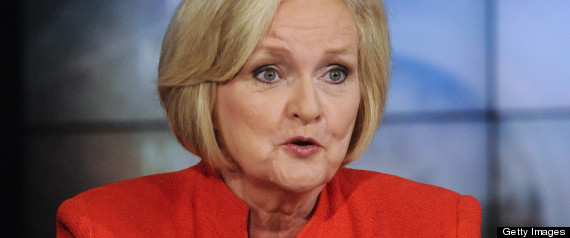
Claire McCaskill Refuses To Rule Out Deploying U.S. Troops To Syria

In this photo, Sen. Claire McCaskill (D-MO) appears on 'Meet the Press' in Washington D.C., Sunday, Dec. 2, 2012. The Missouri Democrat spoke about possible U.S. involvement in Syria on CBS's "Face the Nation" on Sunday, April 28, 2013. (Photo by: William B. Plowman/NBC/NBC NewsWire via Getty Images) 

WASHINGTON -- Sen. Claire McCaskill (D-Mo.) on Sunday refused to rule out the possibility of deploying American troops to Syria, while top Republican lawmakers called for increased U.S. intervention in the civil war there. The comments, made on various Sunday television programs, reflect an increased sense of urgency this week about the potential use of chemical weapons by the Syrian regime.

"I don't think you want to ever rule it out," McCaskill said of U.S. troop involvement in the Syrian conflict, which has claimed more than 70,000 lives over two years. Speaking on CBS's "Face the Nation," McCaskill, who sits on the Senate Armed Services Committee, said, "We don't want to [deploy U.S. troops] unless it's absolutely necessary, [but] I don't think you ever want to say absolutely not."

Sen. John McCain (R-Ariz.) took a more cautionary tack on NBC's "Meet the Press."

"The worst thing the United States could do right now is put boots on the ground in Syria," said McCain, who is a longtime advocate of greater American intervention in the Syrian conflict. He instead called on the U.S. to help establish "a safe zone," and to begin arming the Syrian rebels, to whom the U.S. has so far provided only nonlethal aid.

McCain also called for increased aid from Washington to assist with the growing refugee crisis in the region, and said the U.S. should help prepare an "international force" capable of securing Syria's stockpile of chemical weapons in the event Syrian President Bashar Assad is removed from power.

Sen. Lindsey Graham (R-S.C.), appearing alongside McCaskill on "Face the Nation," said monitoring those chemical weapons was a top priority for the United States and the international community. "The greatest risk [to the U.S.] is a failed state with chemical weapons falling in the hands of radical Islamists," Graham said. "The longer [the conflict] goes, the more likely it is that you have a failed state, and all hell's going to break loose in the region."

Senators learned this week that American intelligence agencies have evidence that Assad's regime has deployed chemical weapons, but White House officials cautioned that this evidence is still being evaluated.

McCaskill, too, said the United States should be "ready if we need to take some kind of military action," but did not explicitly endorse sending weapons to the Syrian rebels, nor did she mention the creation of a "safe zone," as McCain advocated.

Graham appeared to go further than McCain or McCaskill in proposing direct U.S. action in Syria, saying, "One way you can stop the Syrian Air Force from flying is to bomb Syrian air bases with missiles. You don't need to go deep into Syria to do that." He said Assad's forces' aerial capabilities play a major role in the conflict, and "if you could neutralize the air advantage the Syrian government has over the rebels, I think you could turn the tide of battle pretty quickly."

President Obama said last year that the use of chemical weapons by Assad's regime was a "red line" for the U.S. and would have "enormous consequences." But late this week, White House officials sounded a cautious note, telling reporters on a background call, "If we reach a definitive determination that this red line has been crossed [we will be] consulting with our friends and allies and the international community more broadly, as well as the Syrian opposition, to determine what the best course of action is."

For House Intelligence Committee Chairman Mike Rogers (R-Mich.), the currently available evidence is conclusive, he said on ABC's "This Week."

"We have classified evidence, [which] strengthens the case [that] some amount of chemical weapons have been used over the last two years," he said, while acknowledging that "the options aren't huge, but some action needs to be taken.

Michael McCaul: Boston Bombings Device 'Leads Me To Believe' There Was A Trainer Involved

Rep. Michael McCaul (R-TX) speaks during a hearing regarding the alleged ethics breaches by Rep. Charles Rangel (D-NY) before the House Committee on Standards of Official Conduct July 29, 2010 on Capitol Hill in Washington, D.C. (Photo by Alex Wong/Getty Images) 

WASHINGTON -- The chairman of the House Homeland Security Committee said Sunday that the FBI is investigating in the United States and overseas to determine whether the suspects in the Boston Marathon bombing received training that helped them carry out the attack.

Dzhokhar Tsarnaev, 19, is charged with joining with his older brother, Tamerlan, who's now dead, in setting off the shrapnel-packed pressure-cooker bombs. The bombs were triggered by a remote detonator of the kind used in remote-control toys, U.S. officials have said.

U.S. officials investigating the bombings have told The Associated Press that so far there is no evidence to date of a wider plot, including training, direction or funding for the attacks.

A criminal complaint outlining federal charges against Dzhokhar Tsarnaev described him as holding a cellphone in his hand minutes before the first explosion.

The brothers are ethnic Chechens from Russia who came to the United States about a decade ago with their parents.

"I think given the level of sophistication of this device, the fact that the pressure cooker is a signature device that goes back to Pakistan, Afghanistan, leads me to believe – and the way they handled these devices and the tradecraft – ... that there was a trainer and the question is where is that trainer or trainers," said Rep. Michael McCaul, R-Texas, on "Fox News Sunday."

"Are they overseas in the Chechen region or are they in the United States?" McCaul said. "In my conversations with the FBI, that's the big question. They've casted a wide net both overseas and in the United States to find out where this person is. But I think the experts all agree that there is someone who did train these two individuals."

Rep. Adam Schiff, D-Calif., a member of the House Intelligence Committee, said he thought it's "probably true" that the attack was not linked to a major group. But, he told CNN's "State of the Union," that there "may have been radicalizing influences" in the U.S. or abroad. "It does look like a lot of radicalization was self-radicalization online, but we don't know the full answers yet."

On ABC's "This Week," moderator George Stephanopoulos raised the question to the chairman of the House Intelligence Committee about FBI suspicions that the brothers had help in getting the bombs together.

"Absolutely, and not only that, but in the self-radicalization process, you still need outside affirmation," responded Rep. Mike Rogers, R-Mich.

"We still have persons of interest that we're working to find and identify and have conversations with," he added.

At this point in the investigation, however, Sen. Claire McCaskill said there was no evidence that the brothers "were part of a larger organization, that they were, in fact, part of some kind of terror cell or any kind of direction."

The Missouri Democrat, who's on the Senate Homeland Security and Governmental Affairs Committee, told CBS' "Face the Nation" that "it appears, at this point, based on the evidence, that it's the two of them."

Homemade bombs built from pressure cookers have been a frequent weapon of militants in Afghanistan, India and Pakistan. Al-Qaida's branch in Yemen once published an online manual on how to make one.

Tamerlan Tsarnaev was an ardent reader of jihadist websites and extremist propaganda, officials have said. He frequently looked at extremist sites, including Inspire magazine, an English-language online publication produced by al-Qaida's Yemen affiliate.

In recent years, two would-be U.S. attackers reported receiving bomb-making training from foreign groups but failed to set off the explosives.

A Nigerian man was given a mandatory life sentence for trying to blow up a packed jetliner on Christmas Day 2009 with a bomb sewn into his underwear. Umar Farouk Abdulmutallab had tried to set off the bomb minutes before the Amsterdam-to-Detroit flight landed.

The device didn't work as planned, but it still produced smoke, flame and panic. He told authorities that he trained in Yemen under the eye of Anwar al-Awlaki, a radical American-born cleric and one of the best-known al-Qaida figures.

A U.S. drone strike in Yemen killed al-Awlaki in 2011.

In 2010, a Pakistani immigrant who tried to detonate a car bomb in New York's Times Square also received a life sentence. Faisal Shazad said the Pakistan Taliban provided him with more than $15,000 and five days of explosives training.

The bomb was made of fireworks fertilizer, propane tanks and gasoline canisters. Explosives experts said the fertilizer wasn't the right grade and the fireworks weren't powerful enough to set off the intended chain reaction.

Saturday, April 27, 2013

With new arrest, ricin case takes a strange turn

J. Everett Dutschke is charged in the case involving letters sent to President Obama and others. At the heart of the inquiry is a history of indigenous bickering between two Mississippians.
 
J. Everett Dutschke of Tupelo, Miss., has been charged with developing, producing and stockpiling ricin. Letters containing the poison were mailed to President Obama, a senator and a retired judge. (Thomas Wells / Northeast Mississippi Daily Journal / April 23, 2013)

By Matthew Teague

April 28, 2013

TUPELO, Miss. — Federal agents of all sorts invaded northeast Mississippi several days ago, on a mission: Find the man who sent a poison-laced letter to the president. But the United States government quickly found itself entangled, once again, in a misunderstood land dominated by squabbling tribes and petty vengeances.

Agents first arrested an Elvis impersonator, released him, then on Saturday arrested his nemesis, a karate instructor. Gradually investigators concluded that what they had descended upon was probably less about the president — or the U.S. senator and retired state judge who also received letters — than a serious case of indigenous bickering.

That shocks no one here. "Tupelo is a kaleidoscope," said sociologist Mark Franks, who grew up in nearby Booneville. There are true geniuses walking the streets of Tupelo, he said, and incredibly wealthy, generous people. But also, "every wall-eyed uncle and 'yard cousin' — just referencing the local pejorative — makes it into Tupelo, Miss. It creates a peculiar culture."

Tupelo is best known as the hometown of Elvis Presley, after whom it has named streets, waterways and dry cleaners.

Unlike many other Southern towns its size, it boasts several excellent museums, street art and a large public arena. An arena large enough, in fact, to attract the Ringling Bros. and Barnum & Bailey Circus this month. That's when someone shot Carol, a circus elephant, in what seems to be the first elephantine drive-by ever. Carol is recovering, but Tupelo Police Capt. Rusty Haynes said his investigation has stalled. "Because, to be honest, there are a lot of possible perpetrators."

So people in the area were bemused more than surprised when the FBI, Secret Service and other agencies showed up looking for the soul who had sent letters laced with ricin to President Obama, Sen. Roger Wicker (R-Miss.) and retired Mississippi judge Sadie Holland.

The agents quickly nabbed an odd character in nearby Corinth named Paul Kevin Curtis. He worked as an Elvis impersonator, spun wild conspiracies about the local hospital selling body parts and apparently signed the poisoned letters with his own initials.

But the FBI found no evidence of ricin in Curtis' home. No incriminating research on his computer. They decided he hadn't sent the letters after all and released him Tuesday. Within hours agents had raided the home of his archenemy: J. Everett Dutschke, karate instructor.

Curtis claimed Dutschke wanted to frame him. It wouldn't be the first skirmish between Tupelo's most famous son and a karate man. In 1973, several men climbed on stage during a concert by the actual Elvis. Elvis felt threatened and fought the men, alongside his bodyguards. He felt sure the men had been sent by estranged wife Priscilla's new boyfriend, his own personal nemesis: Mike Stone, karate instructor.

Curtis, 45, and Dutschke, 41, seem locked in an elaborate piece of tribute performance art. Their lives have entwined for years, feuding over small-town grievances as labyrinthine and intricate as any global conspiracy. They met in 2005, and were friendly for a time. When he wasn't teaching karate, Dutschke worked for Curtis' brother Jack at an insurance office. Both men knew Sen. Wicker, and both had connections to the 80-year-old Judge Holland.

It's unclear at what moment the hostilities began, but a few years ago Curtis, who worked at the local hospital, developed a theory that doctors were harvesting organs to sell on the black market. He wrote a book about it called "Missing Pieces." Dutschke published a local newsletter at the time, and after some negotiations apparently rejected Curtis' writings.

There was the question, too, of who had the bigger intellect. Dutschke was a member of Mensa, the club for people with high IQs. A few years ago, Curtis posted a fake Mensa certificate on his Facebook page, which sent Dutschke into a rage. "I threatened to sue him for fraud for posting a Mensa certificate that is a lie," Dutschke told Tupelo's newspaper, the Daily Journal. "That certificate is a lie."

"Aw, yeah. I don't know why Kevin did that," Curtis' father, Jack, said recently in Cleveland, Miss. "These boys were just after each other."

Both men have made multiple trips to jail. Curtis was arrested for, among other things, assaulting a Tupelo lawyer — for which he received a six-month sentence from Judge Holland. In January, Tupelo authorities charged Dutschke with molesting children. He pleaded not guilty, but he shut down his karate school, called Tupelo Taekwondo Plus, while awaiting trial.

After the FBI released Curtis, the two enemies' paths diverged. Curtis headed for New York. "Can you believe that?" Jack Curtis said. "Now he's got publishers all trying to jump the gun on each other to publish his book first. Isn't that something?"

Dutschke, meanwhile, watched federal agents in protective masks search his home, his karate studio and his van.

On Wednesday, Dutschke slipped from sight, traveling with his friend Kirk Kitchens to a remote house in neighboring Itawamba County.

They entered the house and turned on the television, then slipped out the back door and down a wooded path, where they met a waiting car, Kitchens later told a Memphis television station.

Itawamba County Sheriff Chris Dickinson said Dutschke had escaped surveillance.

But the next evening, Dutschke pulled into the driveway at his house and stepped from his minivan like a man returning from routine errands.

On Saturday the U.S. attorney charged him with "knowingly developing, producing" and stockpiling ricin. If convicted he faces maximum penalties of life imprisonment and a $250,000 fine.

Hours before his arrest, Dutschke answered his door by opening it just enough to look out with one dark eye. He held a kitten, which also looked outside. "I'm sorry, I just...," he started. His voice was soft. "I can't talk. I'm so, so sorry."

Could he say, at least, what started this mess?

"Just look around you," he said. "This place is crazy."
Obama With Bangs At White House Correspondents' Dinner 2013 Is Genius (PHOTOS)

At the 2013 White House Correspondents' Dinner, President Obama professed that he's looking to shake things up and improve his image in his second term as president. So it was only natural, POTUS said in his speech, to take a cue from his wife...

... and get bangs.

Cue the awesome Photoshopped photos:
More

FBI: Miss. Man Arrested in Suspicious Letters Case

(JACKSON, Miss.) — A Mississippi man whose home and business were searched as part of an investigation into poisoned letters sent to the president and others has been arrested in the case, according to the FBI.

Everett Dutschke, 41, was arrested about 12:50 a.m. Saturday at his Tupelo home by FBI special agents in connection with the letters, FBI spokeswoman Deborah Madden said. The letters, which allegedly contained ricin, were sent last week to President Barack Obama, Sen. Roger Wicker of Mississippi and earlier to an 80-year-old Mississippi judge, Sadie Holland.

Madden said FBI special agents arrested Dutschke without incident. She said additional questions should be directed to the U.S. attorney’s office. The office in Oxford did not immediately respond to messages Saturday.

(MORE: Paul Kevin Curtis and the Weird History of Domestic Ricin Terrorism)

Dutschke’s attorney, Lori Nail Basham, did not immediately respond to phone or text messages Saturday. Basham said earlier this week that Dutschke was “cooperating fully” with investigators. Dutschke has insisted he had nothing to do with the letters.

Ryan Taylor, a spokesman for Wicker, said Saturday that “because the investigation is still ongoing, we’re not able to comment.”

Charges in the case were initially filed against an Elvis impersonator but then dropped. Attention then turned to Dutschke, who has ties to the former suspect and the judge and senator. Earlier in the week, as investigators searched his primary residence in Tupelo, Dutschke had remarked to reporters, “I don’t know how much more of this I can take.”

Charges initially were filed last week against Paul Kevin Curtis, 45, the Elvis impersonator, but then dropped after authorities said they had discovered new information. Curtis’ lawyers say he was framed.

Curtis’ attorney, Christi McCoy, said Saturday: “We are relieved but also saddened. This crime is nothing short of diabolical. I have seen a lot of meanness in the past two decades, but this stops me in my tracks. “

(MORE: Protecting Against Ricin Exposure: Mail Facility Safeguards “Work”)

Dutschke and Curtis were acquainted. Curtis said they had talked about possibly publishing a book on an alleged conspiracy to sell body parts on a black market. But he said they later had a feud.

Judge Holland is a common link between the two men who have been investigated, and both know Wicker.

Holland was the presiding judge in a case in which Curtis was accused of assaulting a Tupelo attorney in 2004. Holland sentenced him to six months in the county jail. He served only part of the sentence, according to his brother.

Holland’s family has had political skirmishes with Dutschke.

Her son, Steve Holland, a Democratic state representative, said he thinks his mother’s only other encounter with Dutschke was at a rally in the town of Verona in 2007, when Dutschke ran as a Republican against Steve Holland.

Holland said his mother confronted Dutschke after he made a derogatory speech about the Holland family. She demanded that he apologize, which Holland says he did.

Steve Holland said he doesn’t know if his mother remembers Curtis’ assault case.

MORE: Letter With Ricin Sent to Senator: How Dangerous Is the Toxin?

Before Bombs, a Battered American Dream


The New York Times:

It was a blow the immigrant boxer could not withstand: after capturing his second consecutive title as the Golden Gloves heavyweight champion of New England in 2010, Tamerlan Anzorovich Tsarnaev, 23, was barred from the national Tournament of Champions because he was not a United States citizen.
Read the whole story at The New York Times

Exclusive: Imam of Mosque Visited by Bombing Suspect Speaks to TIME

Tamerlan Tsarnaev waiting for a decision after a boxing match during the 2009 Golden Gloves National Tournament of Champions in Salt Lake City on May 4, 2009

The old imam cringes at the sound of that name—Tamerlan Tsarnaev—furrowing his brow into a bed of creases as he sighs and looks away. There is about half an hour left until the next call to Friday prayers, and he is seated in the third-floor office of his mosque in the city of Makhachkala in southern Russia. At last he indulges the question: “None of our men, not a single person, has ever known him or ever seen him.”

It is a mantra that Imam Khasan-Khadzhi Gasanaliev has had to repeat for journalists many times this week, ever since it emerged that Tsarnaev, the suspected bomber of the Boston Marathon, had attended services at the mosque on Kotrova Street. The mosque upholds a more fundamentalist version of Islam than others in the region of Dagestan, and it has been known as a place of worship for suspected terrorists in Russia. On Thursday, Tsarnaev’s father Anzor admitted that his son had gone there for services during a six-month visit he made to Dagestan last year. “He went with me,” the elder Tsarnaev told a press conference on Thursday in Makhachkala. “We went wherever there was space. There was not always space on Kotrova. It’s small.” He added: “But he had no friends there. You don’t make friends that fast around here.”

Investigators have not revealed any links between Tsarnaev and any Islamist groups, nor have they explained his alleged motives. But his acquaintances and members of his family have said that he became an adherent of fundamentalist Islam in the years before the bombings. The other suspect in the Boston attacks, Tsarnaev’s younger brother Dzhokhar, told investigators from his hospital bed this week that he and his brother were motivated by the American wars in Iraq and Afghanistan, according to a report in the Washington Post that cited U.S. officials familiar with the investigation.

The officials told the Post that the Tsarnaev brothers were “self-radicalized,” meaning that their views were shaped by what they saw online and knew of U.S. actions in the Muslim world. But judging by the opinion of the United States that Gasanaliev expressed to TIME, Tamerlan’s alleged politics would at least have been reinforced by the views upheld at the mosque on Kotrova Street.

“America will soon collapse. It will disappear,” Gasanaliev said matter-of-factly after sitting down with TIME for an exclusive interview. “How many years did the Arabic caliphate rule? For hundreds of years the world was ruled by the Arabic caliphate. And it was a wonderful ruler. Now America is the great power. But tomorrow it will fall apart, a few more hurricanes, a few more of something else.” Pausing for a moment, he switches to a different tone: “But today, we must all look each other in the eyes honestly, wish each other well, respect each other and love each other. There should be no violence.”

Last week’s violence in Boston confuses him not because it was indiscriminate, but because it has caused such an uproar, bringing a pack of journalists to Dagestan with questions for him and his mosque. “Somebody from somewhere was killed, or something was fabricated, and so much noise because of this,” he says with bewilderment. “How much has America done in Vietnam, in all its wars everywhere. Right now it is turning the entire Arab world upside down. They kill hundreds, thousands, millions of people and nobody is interested. But over there someone does something, blows something up, someone is killed, and because of this they send so many people [journalists] here. They are surprised by this.”

He is adamant that his mosque, a bastion of conservative Salafi Islam in Dagestan, had nothing to do with Tsarnaev’s turn to radicalism or with the Boston bombings. “There is no politics here,” he says. “Our sermons are clean.” And indeed, the sermon he gave at Friday prayers this week avoided politics completely, focusing on the need for piety, for all Muslims to stay on the “straight path” set out by Allah. “Do not fear, and do not despair, but rejoice in the paradise that has been promised to you,” he proclaimed to the congregation of men, whose numbers packed the mosque and spilled out into the courtyard. Even amid the steel bars and bricks being used for the mosque’s reconstruction, they laid down prayer rugs and took in the sermon, the vast majority between the ages of 20 and 30.

Few of them would speak openly to a reporter afterward, but some of those who did said they appreciated the mosque on Kotrova Street for not shying from political and social issues. “He tells it straight,” a worshiper named Magomedgadzhi said of the imam, declining to give his surname. “He can criticize the people in power if they deserve it. You don’t really hear that anywhere else.”

The Salafi movement’s confrontations with the state are well known throughout this region of Russia. The movement acts as an alternative to the more mainstream Sufi mosques, which are sanctioned and supported by the state. “They have not given a single kopek to help our mosque,” Gasanaliev says of the Sufis and their friends in government. “They accuse us of being Wahhabists,” he says, referring to an ultra-conservative brand of Sunni Islam that is synonymous in Russia with terrorism.

Although he does try to dislodge that reputation and cooperate with the authorities  Gasanaliev is deputy mufti of Dagestan, a role that grants him some clout with regional authorities — his mosque is watched by the security services with a magnifying glass. Two sources close to the local branch of the FSB, Russia’s version of the FBI, told TIME on Monday that associating with the Salafi movement is enough to get on a counter-terrorism watch list in Russia. That was the case with Tsarnaev during his time in Dagestan, where he was flagged by the FSB as a potential extremist, the sources said.

Gasanaliev said no security services have visited the mosque since the Boston bombings. But in the past, the scrutiny of the FSB has been nearly constant, and it is little wonder why. Congregants at the mosque on Kotrova Street have often been killed in shootouts with Russia’s counter-terrorism forces, and the Salafi bookstore across the street offers literature that has been blacklisted by the state. Tucked in among copies of the Koran and video lectures on such topics as courtship and divorce, there are the tracts of Hizb-ut-Tahrir, a pan-Islamic political party that operates freely in the West but is banned in Russia as an extremist organization, as well as in other former Soviet republics in Central Asia.

Asked the reason for the state’s attention to his mosque, Gasanaliev smiles and waves his hands dismissively. “They are making elephants from flies,” he says. What matters to him is that his mosque is open to all comers, whatever their views or denominations. “We have no politics here,” he says. “Our law is sharia. You come here to pray and you leave. Anyone can come here. Nobody will ask you who you are. That is part of sharia.” And what his congregants do from there is none of his responsibility.

Part of 9/11 Plane’s Landing Gear Discovered Near World Trade Center

This Friday, April 26, 2013, photo provided by the New York City Police Department shows a piece of landing gear that authorities believe belongs to one of the airliners that crashed into the World Trade Center on Sept. 11, 2001.
(NEW YORK) — A rusted 5-foot-tall piece of landing gear believed to be from one of the hijacked planes destroyed in the Sept. 11 attacks has been discovered near the World Trade Center wedged between a luxury apartment building and a mosque site that prompted virulent national debate about Islam and freedom of speech.

The twisted metal part, jammed in a sliver of open space between the buildings, has cables and levers on it and is about 3 feet wide and 1.5 feet deep. It includes a clearly visible Boeing Co. identification number, New York Police Department spokesman Paul Browne said Friday.

“The odds of this being wedged between there is amazing,” Browne said, adding it was not surprising that it went undiscovered for more than a decade given the location. “It had to have fallen just the right way to make it into that space.”

Other World Trade Center wreckage had been discovered at the buildings and around the area in years past.

The piece of equipment was discovered Wednesday by surveyors inspecting the lower Manhattan site of a planned Islamic community center, at 51 Park Place, on behalf of the building’s owner, police said.

An inspector was on the roof and noticed the debris and then called 911. Police secured the scene, documenting it with photos.

Police detectives and National Transportation Safety Board investigators will determine whether the equipment is from the American Airlines plane or the United Airlines plane that slammed into the twin towers on Sept. 11, 2001, destroying the towers and killing nearly 3,000 people.

When plans for the Islamic center, about three blocks from ground zero, were made public in 2010, opponents said they didn’t want a mosque so close to where Islamic extremists attacked. They argued the site was “sacred” because landing gear from one of the hijacked Boeing 767 jets had punctured the roof of the building on Sept. 11.

During street protests, they clashed with supporters of the center, who said it would promote harmony between Muslims and followers of other faiths.

The building includes a Muslim prayer space that has been open for three years. After protests died down, the center hosted its first exhibit last year. The space remains under renovation.

Donna Marsh O’Connor, who lost her daughter Vanessa Lang Langer in the attacks and is a member of September 11th Families for a Peaceful Tomorrow, called the landing gear discovery “bizarre.”

O’Connor is a supporter of the Islamic center and said the fact that the plane fragment was found there “makes me think that this was the right place for a center that was going to heal the divide.”

In a statement, Sharif El-Gamal, the president of Soho Properties, which owns 51 Park Place, said workers called the city and the police as soon as they discovered the landing gear. He said the company is cooperating with the city and the police to make sure the piece of equipment “is removed with care as quickly and effectively as possible.”

The medical examiner’s office will complete a health and safety evaluation to determine whether to sift the soil around the buildings for possible human remains, police said.

Patricia Riley, whose sister Lorraine Riley was killed in the Sept. 11 attacks, called the landing gear discovery “very strange.”

“Twelve years later we are still finding remnants of the attack on our country,” she said. “… For years to come we’ll continue to find things that we didn’t see before. Hopefully they’ll serve as a reminder that we have to stay vigilant.”

Outside the Islamic center building, known as Park51, a police officer stood next to the door on Friday and a police barricade was set up to contain the many journalists who had gathered to try to see the piece of the plane.

The landing gear could not be seen from the sidewalk so commuters rushed by and looked quizzically at the gathering.

Among the bystanders was one immersed in the legacy of the attacks: Van Vanable, heading home from his job as an ironworker building the new 1 World Trade Center.

“Amazing,” he said of the find. “There’s still pieces to the puzzle.”

The Park51 space, a former Burlington Coat factory, is a five-story, mildly run-down building. Renovations are expected to take years and would add an auditorium, a pool, a restaurant and culinary school, a child care facility and artist studios.

The piece of plane is wedged in an alley space between that building and 50 Murray St., a luxury loft rental building.

___

Associated Press writers Tom Hays, Jennifer Peltz Colleen Long and Karen Matthews in New York and David B. Caruso in Boston contributed to this report.


Thursday, April 25, 2013

How Strong Is North Korea's Military? A Look At The Country's Capabilities

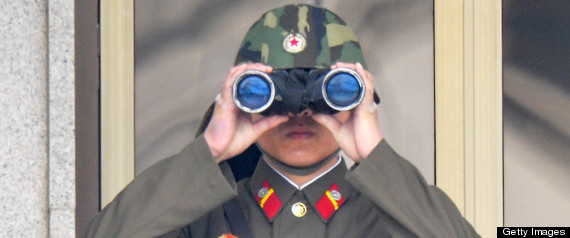
A North Korean soldier using binoculars watches from his quarters at the truce village of Panmunjom in the demilitarised zone on April 23, 2013.

SEOUL, South Korea -- North Korea's military, founded 81 years ago Thursday, is older than the country itself. It began as an anti-Japanese militia and is now the heart of the nation's "military first" policy.

Late leader Kim Jong Il elevated the military's role during his 17-year rule, boosting troop levels to an estimated 1.2 million soldiers, according to the South Korean government. The military's new supreme commander, Kim Jong Un, gave the Korean People's Army a sharpened focus this year by instructing troops to build a "nuclear arms force." Yet the army is believed to be running on outdated equipment and short supplies.

The secretive army divulges few details about its operations, but here is an assessment from foreign experts of its strengths and weaknesses:

___

ARTILLERY

North Korea provided a chilling reminder of what its artillery is capable of when it showered a front-line South Korean island with shells, killing four people in November 2010 and underscoring the threat that its artillery troops pose at the disputed sea border.

South Korea says North Korea has more than 13,000 artillery guns, and its long-range batteries are capable of hitting the capital Seoul, a city of more than 10 million people just 30 miles (50 kilometers) from the border.

"North Korea's greatest advantage is that its artillery could initially deliver a heavy bombardment on the South Korean capital," Mark Fitzpatrick, a former U.S. State Department official now with the International Institute for Strategic Studies, said in an email.

South Korea's defense minister estimates that 70 percent of North Korean artillery batteries along the border could be "neutralized" in five days if war broke out. But Sohn Yong-woo, a professor at the Graduate School of National Defense Strategy of Hannam University in South Korea, said that would be too late to prevent millions of civilian casualties and avert a disastrous blow to Asia's fourth-largest economy.
SPECIAL FORCES

Experts believe guerrilla warfare would be the North's most viable strategy in the event of conflict, since its conventional army suffers from aging equipment and a shortage of firepower.

Seoul estimates North Korea has about 200,000 special forces, and Pyongyang has used them before.

In 1968, 31 North Korean commandos stormed Seoul's presidential Blue House in a failed assassination attempt against then-President Park Chung-hee. That same year, more than 120 North Korean commandos sneaked into eastern South Korea and killed some 20 South Korean civilians, soldiers and police officers.

In 1996, 26 North Korean agents infiltrated South Korea's northeastern mountains after their submarine broke down, sparking a manhunt that left all but two of them dead, along with 13 South Korean soldiers and civilians.

"The special forces' goal is to discourage both the United States and South Korea from fighting with North Korea at the earliest stage of war by putting major infrastructure, such as nuclear plants, and their citizens at risk," said Kim Yeon-su, a professor at Korea National Defense University in Seoul. "The North's special forces are a key component of its asymmetric capabilities along with nuclear bombs, missiles and artillery. Their job is to create as many battlefronts as possible to put their enemies in disarray."

___

ON LAND, BY SEA AND IN THE AIR

In March 2010, 46 South Korean sailors died in a Yellow Sea attack on their warship that Seoul blamed on a North Korean submarine. Pyongyang denies involvement. Separately, since 1999, North and South Korean navies have fought three bloody skirmishes near their disputed western maritime border. Experts say those battles show while the South has an edge in naval firepower and technology, the North relies on the element of surprise.

North Korea has 70 submarines while South Korea has 10, according to Seoul's Defense Ministry. The most menacing threats from the North's navy are small submarines that would deposit commando raiders along the South Korean coast, said John Pike, head of the Globalsecurity.org think tank.

North Korea also has 820 warplanes, more than South Korea, though Seoul is backed up by American air power. The South says most of the North's aircraft are obsolete. North Korea also suffers chronic fuel shortages that have forced its air force to cut sorties, experts say.

"North Korea would not be able to prosecute a full-fledged war for very long," Fitzpatrick said. "Its biggest problem is that North Korea would quickly lose control of the skies because of the vastly superior (South Korean) and U.S. air forces. The reported number of North Korean aircraft is meaningless, because many of them cannot fly, and North Korean pilots have little training in the air."

The U.S. stations 28,500 U.S. troops in South Korea and has recently flown nuclear-capable stealth B-2 bombers and F-22 fighter jets during joint drills in a show of force aimed at deterring North Korea.

Logistics and supplies are another issue. Heavy equipment deployed by naval and air forces requires extensive repairs, especially on rugged terrain like the Korean Peninsula. South Korea's Defense Ministry estimates North Korea's wartime resources, mostly stored underground, would last only two to three months.

"North Korea's only chance of winning any war depends on how quickly it can end one," Sohn said.

North Korea could try to compensate for its lack of effective equipment with sheer manpower. North Korea, a country of about 25 million, has an estimated 7.7 million reserves.

___

MISSILES AND NUCLEAR WEAPONS

North Korea says it needs to develop nuclear weapons as a deterrent against U.S. aggression. It has conducted three underground nuclear tests since 2006, the most recent in February.

Pyongyang is believed to have enough weaponized plutonium for four to eight nuclear bombs, according to Siegfried Hecker, a nuclear expert with Stanford University's Center for International Security and Cooperation.

But he doubts Pyongyang has mastered the technology to tip a missile with a nuclear warhead. "I don't believe North Korea has the capacity to attack the United States with nuclear weapons mounted on missiles and won't for many years," he said on the website of Stanford University's Freeman Spogli Institute for International Studies this month.

Bruce Bennett, a Rand Corp. expert, said earlier this month that it's very unlikely the North has a nuclear missile capable of hitting the U.S. but said there is a "reasonable chance" that Pyongyang has short-range nuclear missile capability.

___

CHEMICAL AND BIOLOGICAL WEAPONS

North Korea denies it runs any chemical and biological weapons programs. South Korea claims that Pyongyang has up to 5,000 tons of chemical weapons.

The IISS says that although the figures are "highly speculative," the North probably does possess chemical and biological arms programs.

"Whatever the actual status of North Korea's chemical and biological capabilities, the perception that it has, or likely has, chemical and biological weapons contributes to Pyongyang's interest in creating uncertainties in Washington, Seoul and Tokyo and raises the stakes to deter or intimidate potential enemies," it said on its website. North Korea is not a signatory to the Chemical Weapons Convention, but it has acceded to the non-binding Biological and Toxin Weapons Convention.

___

Wednesday, April 24, 2013

Russia prepares replacement for soviet-era railway-based missiles


Russia has started design works to create a new railroad-based missile system to replace weapons destroyed in the mid-2000s under the old START treaty and are now allowed by the “New START”.

The design bureau that developed Russia’s most modern ballistic missiles the Bulava, Topol and Yars, has started research and development of the new project – the railway car based ICBM – Deputy Defense Minister Yuri Borisov told the press on Tuesday.

Currently work is at a primary stage and does not require significant investment. The overall costs to design a completely new railway-based missile has not yet been determined, he added.

If complete and launched into production, the missile would replace the RT-24 system, also known as SS-24 Scalpel – the intercontinental weapon disguised as an ordinary freight train, which made its detection and preemptive destruction extremely difficult.

Russia decommissioned its railway car based missiles in 2005 and destroyed all the systems by 2007 as part of the START II treaty on nuclear arms reduction with the US. The ‘New START’ treaty (which is also called START III in Russia) that came into force in 2011 does not limit the use of railway car based systems and allows Russia to restart production.

The move could be seen as Russia’s reply to the continuing development of the global missile defense system by the US. Russia has opposed the move and demanded legally-binding guarantees that the missile system will not be used against its forces (legal guarantees would allow Russian monitors to inspect the missile defense stations). The US says the system is planned to counter the possible attack from ‘rogue states’ such as Iran and North Korea, but offers only political guarantees, leaving Russia in the dark concerning the particular details of the system.

The standoff has already led to statements that Russia could quit the New START treaty if no mutually acceptable agreement is reached on missile defense. However, Russian officials repeatedly said that such a turn of events is extremely undesirable.

The United States insist on its position, and it is reported that the missile defense issue was the main topic of the personal message that President Barak Obama passed to Vladimir Putin last week. However, Russian diplomatic sources again stated that Moscow was not happy with the suggestions made in the message and the there was no movement over the missile defense problem.

Tsarnaev Snafus: Nearly 12 Years After 9/11, Boston Bombings Highlight Intelligence Holes 'Time'

The Boston Fire Department Hazardous Materials team clean the blast site near the Boston Marathon finish line one week after the FBI handed over Boylston street back to the city on April 22, 2013 in Boston, Mass.

Ten years ago the Department of Homeland Security was created to end the lack of information sharing amongst U.S. law enforcement and intelligence agencies that had missed the 9/11 terrorist plot. Now it seems that blockages and miscommunications between and within those agencies caused them to miss the Boston marathon bomb plot last week that killed three people and wounded 176, lawmakers said Tuesday.

What “is troubling to me [is] that this many years after the attacks on our country in 2001, that we still seem to have stovepipes that prevent information from being shared effectively not only among agencies but also within the same agency in one case,” said Senator Susan Collins of Maine, the top Republican on the Homeland Security Committee.

Investigators are still compiling what various U.S. agencies knew about Tamerlan and Dzhokhar Tsarnaev in the months and years leading up to the bombings. Thus far what’s clear is that some agencies didn’t know what other agencies knew. Indeed teams within agencies seemed to not share information wich each other.

In a statement over the weekend, the Federal Bureau of Investigation said they were informed in March 2011 by Russia’s security agency, known as the FSB, that Tamerlan was becoming radicalized. The agency followed up, interviewing Tamerlan and his family and speaking to people at his school, Bunker Community College. They found nothing “derogatory,” sent their findings back to Russia and heard nothing back from the FSB, they said.

But, the FSB had “multiple” contacts with the FBI and at least one was after October 2011, according to Senator Richard Burr, a North Carolina Republican who sits on the Intelligence Committee. Apparently that information was not shared with the original team who interviewed Tamerlan. Tamerlan, 26, who was believed to be the mastermind behind the marathon attack, was killed in a shootout with police on Thursday.

Then there’s the question of Tamerlan’s travel to Russia last year. The FBI said they did not know that Tamerlan had left the country because he misspelt his name on his exit card. Tamerlan had a U.S. green card and had been applying for U.S. citizenship — a process that had been temporarily blocked due to flags the FBI had placed on his file. (His brother, Dzhokhar, was granted citizenship on Sept. 11, 2012.)

But Homeland Security Secretary Janet Napolitano testified at an immigration hearing before Congress on Tuesday that her department had been aware of Tsarnaev’s departure. Why this information was not shared with the FBI is an important question, said Senator Lindsey Graham, a South Carolina Republican. “Not to mention, was his name misspelt when he came back?”

Graham said Congress would hold multiple hearings into what happened in Boston and how the brothers became militantly radicalized. In the months after Tamerlan’s return in July 2012, he launched a Youtube page on which he posted radical Islamist videos. “Here’s what I can’t get over,” Graham told TIME, “how did you miss all this radical stuff on videos? But even deeper: When the bomb went off last Monday, wouldn’t the first thing you’d do if you’re the FBI is to go into the files of everyone we’d interviewed in the Boston area regarding terrorism and see what pops up? How could his name not pop up when they had the photo of the guy? How could they not match the two? So clearly there’s a big problem here.”

The FBI does have a facial recognition database of 12 million mug shots but they have yet to confirm or deny that they ran the images of the Tsarnaev brothers through that database before releasing them on Thursday, asking for the public’s help to identify them. It was the release of their photos that prompted the Tsarnaev brothers’ final bloody rampage that left one police officer dead and another wounded before a manhunt for Dzhokhar that shut down Boston all day Friday finally ended in Dzhokhar’s surrender.

Investigators are now not only compiling what various government agencies knew about the brothers, but are attempting to rebuild both their lives. “They’re leaving no stone unturned,” said Senator Dan Coats, an Indiana Republican, emerging from a classified FBI briefing on the bombings. “Anything relative to these individuals and their lives, what they’ve been doing, whether it’s been here or whether it’s been the trip back to Russia… All of [Tamerlan's] life is being reconstructed literally day by day hour by hour.”

For all the apparent missteps, Hill figures are not rushing to judgement. While most Republicans expressed concern about the apparent miscommunications, none was willing to say the FBI dropped the ball. “There’s been some stonewalls and some stovepipes that’s been reconstructed that were probably unintentional but we’ve got to review that issue again and make sure that there’s the free flow of information,” said Senator Saxby Chambliss of Georgia, the top Republican on the Intelligence Committee. “I can’t say the FBI dropped the ball. I don’t see anybody yet who dropped that ball, that may yet develop.”

Democrats for their part have been even less critical of the FBI. Intelligence Committee Chair Dianne Feinstein, a California Democrat, said there are always lessons to be learned after this kind of attack, but that the cooperation in the week since has been exemplary. “What was very clear to me is that this is a long arduous task and it makes no sense to speak about any specific part of it right now,” Feinstein told reporters. “But what I know is that I have never in my lifetime seen an effort as positive as this one is in terms of the cooperation and communication between law enforcement and investigative agencies and I believe that they will get to the bottom of it eventually.”

Given the confusion that has already emerged, that conclusion eventually may be months, or years, away.
                                                                     http://swampland.time.com

Tuesday, April 23, 2013

France Legalizes Gay Marriage Despite Vocal and Angry Opposition 'Time'

French members of parliament point at unidentified protesters against same-sex marriage attempting to disrupt the final parliamentary vote in the French National Assembly to legalize gay marriage and allow same-sex couples to adopt children at the French National Assembly in Paris, France on April 23, 2013.

Controversial legislation establishing marriage and adoption rights for same-sex couples cleared final passage in France on April 23 after a 331 to 225 vote in the Left-controlled parliament. But the protests it has prompted in recent months aren’t likely to fade any time soon. As France’s opposition conservatives promise to mount legal challenges to block the law’s application, leaders of the well-organized and vocal groups who’ve fought the measure will continue denouncing it as an attack on matrimony and the traditional family unit.

The French lower house of parliament on Tuesday passed the so-called “Marriage for All” bill, which opens marriage and adoption to same-sex couples with identical rights previously limited to heterosexual unions. That vote—which was largely split down left-right lines—makes France the ninth European Union member and the 14th nation in the world to legalize same-sex marriage. Opponents decried the legislation—which issued from one of Socialist President François Hollande’s main campaign promises—as deforming time honored definitions of marriage, and endangering children by permitting gay and lesbian couples to adopt. French public opinion was mixed: polls have consistently shown around 60% of people favoring legalization of same-sex marriage, with a small majority opposed to adoption rights accompanying that reform.

Indeed, given France’s rather liberal, live-and-let-live social reputation abroad, it struck some foreign observers as ironic the French took so long—and battled so bitterly—to legalize same-sex marriage that purportedly stodgier “Anglo-Saxon” countries like the U.S. and U.K. now appear to be moving towards rapidly. Be that as it may, backers of “Marriage for Everyone” cheered its final passage—and expect, once the law clears constitutional review in late May, the first legal same-sex marriages to be performed in June.

“It’s a generous law, and a law of equality,” an elated Christine Taubira, Socialist Justice Minister and author of the bill, told parliament after the vote. “We believe the first weddings will be beautiful, and that they’ll bring a breeze of joy, and that those who are opposed to them today will surely be confounded when they are overcome with the happiness of the newlyweds and the families.”

That’s a nice thought, but the deep divisions that have erupted and spread across France since “Marriage for All” was introduced in November will not close quickly—as opponents now warn. Political conservatives, social traditionalists and members of all of France’s main religious organizations have loudly voiced their common hostility to a measure they see as deforming the institution of marriage and family unit. Banding together in collective protests, opponents of the legislation staged numerous demonstrations in cities across France, and drew as many as 800,000 people during one of four Paris marches. Leaders warn they’ll neither dissolve the movement, nor ease pressure on political leaders until the pending law is rescinded.

The size and militancy of the gay-marriage opposition appears to have increased with time. That also includes indications that extremist elements from the French far right may have also joined movement. Overtly homophobic slogans were carried and chanted by small clusters of demonstrators in recent Paris marches, where clashes with police also occurred.

Similar violence has also broken out between cops and demonstrators who gathered each night outside parliament ahead of the April 23 vote. That’s not the only way the protest movement—or people claiming to be part of it—has radicalized. Savage attacks on gay men have also recently occurred in Paris, Lille, Bordeaux, and Nice amid what backers of “Marriage for All” claim is an intolerable atmosphere of homophobia created by the proposal’s enemies.

Leaders of the protest movement have denied any homophobic sentiment or intent behind their campaign, and have denounced the recent insults and attacks on gays and lesbians across France. They’ve been less apologetic, however, about the ways gay-marriage opponents have targeted politicians and pundits who’ve led the push for the reform’s swift passage into law.

Struggle over “Marriage for All” has challenged politics-as-usual in other ways as well. Though virtually all leftist legislators fell in behind Hollande’s landmark social reform throughout its voyage to Tuesday’s vote, the measure split the centrist Union of Democrats and Independents party into starkly opposing camps of people supporting or rejecting the bill. Meantime, several members of the conservative Union for a Popular Majority (UMP) party wound up abstaining while fellow members voted against the text. Most of those UMP hold-outs—many younger party risers who served in cabinets of by ex-President Nicolas Sarkozy—had previously expressed their personal support of a reform, even if politics prevented them from voting for it. Six UMP legislators bucked the party’s line and cast votes backing the bill.

But common opposition to “Marriage for All” inspired several UMP officials to march alongside legislators from the extreme-right National Front during an April 21 protest in Paris. That broke a long-standing taboo among mainstream conservatives prohibiting association or partnership with the toxic far-right—a precedent some political analysts think may eventually see a block of the UMP breaking off to occupy far-right positions traditionally monopolized by the FN. Such expectations suggest that if “Marriage for Everyone” creates the legal opportunity for wedded bliss for same-sex couples, it’s only just started provoking serious domestic unrest within some of France’s political families.
                                                                      Time

Sunday, April 21, 2013

Russia dreams of new pyramid scheme in Egypt 'Haaretz'

Egyptian President Mohammed Morsi seeking 'real political pact' with Russia, and asked a $2-billion loan while about it

Is it possible that during a period of Muslim Brotherhood rule, secular Russia will find its way back into Egypt? It seems that as Egypt’s economic millstone grows, ideological differences are being pushed aside.

On Friday, Egyptian President Mohammed Morsi asked his Russian counterpart, Vladimir Putin, for a loan totaling $2 billion. It appears that Russia will accommodate the request, and even encourage Russian investment in Egypt − in addition to supporting efforts to build a nuclear reactor to bolster the nation’s power supply.

During a press conference in Moscow, Morsi declared that his government is seeking to make a “real political pact” with Russia, and that his country needs the Russian loan to increase Egypt’s foreign currency reserves. This is in order to meet the International Monetary Fund’s condition for receiving a $4.8 billion loan that has been stuck in the pipeline for many months.

It seems there is a strategic aspect behind the Russian loan and Putin’s support. “The Americans support the Egyptians with about $2 billion every year. They understand the strategic importance that Egypt has in the area. We also need to fund our foreign policy,” said Yuri Ushakov, a foreign policy adviser to Putin, while speaking to the Bloomberg news agency.

This is not the first such statement made by the Russians that reflects a new direction for the Kremlin. According to the Iraqi newspaper Azzaman, Russia has asked Egypt and Algeria for permission to build a naval base in their territory, to replace their Syrian port of Tartus, if and when Syrian President Bashar Assad’s regime falls.

That request could symbolize a new perception in Russia, according to which not only is Assad close to the end, but also that those who replace him are likely to sever ties with Russia over its unreserved support of the Syrian president.

According to the newspaper, which cited sources in Algeria and Cairo, Russia made the request before Morsi’s visit to Russia this week so that the proposal could be discussed.

In return, Russia promised to supply Egypt with wheat at prices lower than the world market, as well as providing military and economic support. According to Egyptian sources, Egypt refused the Russian request after Algerian President Abdelaziz Bouteflika refused the request. Algeria also refused a Russian request for permission to use its seaports in order to create an intelligence-gathering center, and to service its submarines and other naval vessels.

Relations between Egypt and the Soviet Union, close allies during Nasser’s regime during the 1950s and 60s, became strained while Anwar Sadat was in power, after he decided to switch Egypt’s strategic orientation from the U.S.S.R to the U.S.
Now, Russia hopes to renew the countries’ trade pact with a joint committee and increase trade between them − valued at $3.5 billion last year − by almost 70 percent.

“The nearing of Egypt and Russia will not come at the expense of Egypt’s relations with the U.S.,” one Western diplomatic official opined. “The interesting aspect is that Russia has begun to realize that its bet on Syria is going to fail, and that it will have to prepare itself for a strategic alternative.”

An Egyptian analyst told Haaretz that “Egyptians have yet to recover from the trauma of the Soviet presence in Egypt during the 1950s and 60s. Despite the criticism of the U.S., Egypt cannot swap its diplomatic ties with the U.S. for ties with Russia. The global situation today is not like it was, and Egypt cannot play Nasser’s game between Moscow and Washington.” 


Boston Services Held to Honor Victims, Responders 'Time'

(BOSTON) — Four glowing white pillar candles illuminated photographs of the people killed in bombing-connected violence in the Boston area last week as the city sought comfort in religious services on the first Sunday after the blasts plunged the community into days of chaos.

The photographs showing the faces of 8-year-old Martin Richard, 23-year-old Lu Lingzi, 29-year-old Krystle Campbell and 26-year-old Sean Collier, a police officer at the Massachusetts Institute of Technology, were propped up on the altar at Boston’s Cathedral of the Holy Cross, where Roman Catholic Cardinal Sean Patrick O’Malley spoke about the city’s pain and looked ahead to its spiritual recovery.

“Everyone has been profoundly affected by this wanton violence and destruction inflicted upon our community by two young men unknown to all of us,” said O’Malley, speaking to a crowd of mourners that included Boston Police Commissioner Edward Davis, who sat in the front row of the cavernous cathedral with other elected officials. “It’s very difficult to understand what was going on in their heads. What demons were operating, what ideologies or politics, or the perversions of their religion.”

Two Muslim brothers from Russia, 19-year-old Dzhokhar Tsarnaev and his 26-year-old brother, Tamerlan, are suspected in Monday’s Boston Marathon bombings. Their motive remains unclear. The older brother was killed during a getaway attempt, while the younger brother was captured Friday night after a gunfight with police and remains in a hospital.

Along the barricade that has become a shrine near the marathon finish line, hundreds of people sang hymns and prayed beneath a brilliant blue sky.

“Guide my feet while I run this race,” they sang.

Bouquets of flowers, small white crosses and American flags are piled at the makeshift memorial, where people have been gathering to pay their respects ever since the explosions.

Susan Ackley, a priest at the Emmanuel Episcopal Church a few blocks from the blast site, said religious leaders had visited the area “to clear the air and to bless it.” She encouraged people to forgive the perpetrators, noting that her congregation had prayed for the suspect who had been killed and the other who remains in police custody.

“Instantaneous forgiveness, I think, is impossible,” she said. “That’s not what needs to happen. But I think it is the role of the churches and the synagogues to try to hold this community of human beings together.”

O’Malley echoed that sentiment, exhorting the congregation to keep the spirit of community generosity alive — and to spread love, not hate.

“We must be people of reconciliation, not revenge,” he said. “The crimes of two young men must not be the justification for prejudice against Muslims or against immigrants.”

Kelly McKernan, who lives just a few blocks from the bombing site, was crying as she stood outside the cathedral, where people were hugging on the sidewalk.

“I hope we can all heal and move forward,” she said. “And obviously, the Mass today was a first step for us in that direction.”

Because it is located within the bombing crime scene, Boston’s historic Trinity Episcopal Church could not host services on Sunday. But the congregation was invited by Temple Israel to worship at their synagogue instead.

The FBI allowed church officials to enter the darkened church Saturday to gather the priests’ robes and the wine and bread.

The temple isn’t far from the hospital where the younger bombing suspect was being treated.

At least one man wore his blue Boston Marathon jacket with its gold unicorn symbol embroidered on the back.

“It’s just really great to have a space that’s safe and open and there’s light,” said Jonathan Ralton, who was volunteering handing out medals and Mylar capes after runners crossed the finish line last week. “You know, God is here. God is with us, wherever we gather. And so I’m just grateful that we have a place to gather and can celebrate.”

At the synagogue, Trinity’s Rev. Samuel T. Lloyd III offered a prayer for “those who must rebuild their lives without the legs that they ran and walked on last week.”

“So where is God when the terrorists do their work?” Lloyd asked. “God is there, holding us and sustaining us. God is in the pain the victims are suffering, and the healing that will go on. God is with us as we try still to build a just world: a world where there will not be terrorists doing their terrible damage.”
www.time.com

Boston Top Cop: Bombers Likely Sought More Attacks 'Time'

Boston Police Commissioner Ed Davis, at podium, speaks while accompanied by State Police Col. Timothy Alben, second from right, and Massachusetts Governor Deval Patrick, right, during a news conference, after the arrest of a suspect of the Boston Marathon bombings in Watertown, Mass., Friday, April 19, 2013.

(WASHINGTON) — Investigators believe the suspects in the Boston Marathon bombing were likely planning other attacks based on the cache of weapons uncovered, the city’s police commissioner said Sunday.

Commissioner Ed Davis told CBS’ “Face the Nation” that authorities found an arsenal of homemade explosives after a gun battle between police and the suspects in the Boston suburb of Watertown early Friday.

“We have reason to believe, based upon the evidence that was found at that scene — the explosions, the explosive ordnance that was unexploded and the firepower that they had — that they were going to attack other individuals,” Davis said. “That’s my belief at this point.”

One suspect, 26-year-old Tamerlan Tsarnaev, was fatally wounded in the gun battle, and his brother, 19-year-old Dzhokhar, escaped, authorities said. The two threw explosive devices at police in their getaway attempt, authorities said.

“There were over 250 rounds of extended ammunition that was found at the scene. This was a five- to 10-minute gun battle that occurred there, punctuated by loud explosions,” Davis said, adding that the explosive devices were homemade.

The scene was loaded with unexploded bombs, and authorities had to alert arriving officers to them and clear the scene, Davis said. One improvised explosive device was found in the Mercedes the brothers are accused of carjacking, he said.

“This was as dangerous as it gets in urban policing,” Davis said.

He said on “Fox News Sunday” that authorities cannot be positive there aren’t more explosives that haven’t been found. But the people of Boston are safe, he said.

Dzhokhar Tsarnaev was captured Friday evening while hiding in a boat in Watertown after a massive manhunt. He is hospitalized in serious condition and has been unable to communicate with authorities.

Davis said shots were fired from the boat, but investigators haven’t yet determined where the gunfire was aimed.

The federal Bureau of Alcohol, Tobacco, Firearms and Explosives is tracing the weapons to try to determine how they were obtained by the suspects.
www.time.com

China and Russia catch up with USA in rearms race 'Pravda.Ru'

World spending on defense for the first time in 15 years fell by $1.75 trillion in 2012, which marked a 0.5-percent reduction in comparison with 2011, according to the Stockholm International Peace Research Institute (SIPRI). The share of the U.S. has fallen below the level of 40 percent for the first time since the collapse of the Soviet Union. Russia and China entered the top three of the countries that increased their military spending.

The research of the institute is based on public expenditure on the maintenance of armed forces, namely, military exercises, salary or remuneration for troops, as well as other employee benefits, operating costs, procurement of weapons and equipment, military construction, research and development works, administrative costs, etc. The total military spending of the world in 2012 in comparable prices made up 1.753 trillion dollars, which was 2.5 per cent of global GDP.
The Institute has also published the list of 15 countries with largest military budgets. The first place still belongs to the United States with its 682 billion dollars, accounting for 4.4 percent of GDP. The second place is taken by China with $166 billion (2 percent of GDP), and the third place - by the Russian Federation with $90.7 billion (4.4 per cent). The statistics on the U.S. is official. Then comes the United Kingdom - $60.8 (2.5) and Japan - $59.3 (1.0). The top five accounts for 60 percent of world military spending - 1.06 trillion dollars.

Fifteen heavyweights close the list (in billions of dollars): France (58.9), Saudi Arabia (56.7), India (46.1), Germany (45.8), Italy (34.0), Brazil (33.1), South Korea (31.7), Australia (26.2), Canada (22.5) and Turkey (18.2). Fifteen countries provide 82 percent of global military spending (1.43 trillion dollars). The United States continues to take the lead in military spending in absolute terms. The country spends more on defense than the following ten countries combined. Although in 2012, the U.S. military budget has decreased by 6 percent, the new index marked a 69 percent increase vs. the indexes of 2001 - the year that became the beginning of the "global war on terrorism," SIPRI experts wrote.
Unlike the U.S., China and Russia have increased their military spending by 7.8 and 16 percent respectively during the accounting period. However, as for GDP percentage-wise, their share in comparison with 2003 remained unchanged, whereas it increased in the U.S. (from 3.7 to 4, 4 per cent). Therefore, an arms race on the part of Russia and China does not make sense.

On the other hand, a slowdown or even a fall in the rate of military spending in the U.S. is connected with economic stagnation, budget savings and the reduction of the mission in Afghanistan. The same applies to U.S. partners in NATO. SIPRI experts predict a further decline of the U.S. share in global military spending after NATO troops are withdrawn from Afghanistan. In terms of GDP share, Saudi Arabia enjoys the highest figure - 8.9 percent. The U.S. and Russia follow with 4,4 percent. All other countries have a much smaller share.

Let us make a stop at this top three. Their share in world expenditure is as follows: United States - 32 percent, China - 9.5, Russia - 5, 2. Russia and China face similar challenges: technical re-equipment of the army and the navy, so their military budgets will grow objectively. In Russia, the increase will be by 53 percent by 2014. Prior to 2020, under the state rearmament program, Russia has a goal to increase the share of new-generation hardware to 70 percent. Twenty trillion rubles (689 billion dollars) have been assigned for the purpose.

China's defense industry by 2025 will become the largest in the world, according to the forecast from the National Intelligence Council of the United States from 2008. This is a long-term perspective - a part of the "Chinese Dream", to protect sovereign interests and put an end to strategic interests of the Western dominance in Asia and the Asia-Pacific region. In addition, Beijing has ongoing territorial disputes with Japan, Vietnam and the Philippines in the South China Sea.
China has ambitious plans to improve strategic forces, including the nuclear submarine fleet; the country also plans to create a strategic bomber. In the next ten years, China should develop fifth-generation fighter jets and aircraft carriers, including through cooperation with Russia. China's military budget, according to IHS Global Insight, will double from 2011 to 2015, exceeding the combined defense spending of all other countries in the Asia-Pacific region.

China has a long way to go to catch up with the USA, of course. However, the correlation between them has decreased from 7 to 1 in 2003, and then from 4 to 1 in 2012, SIPRI's Sam Perlo-Freeman, one of the authors of the report, told the  Associated Press. But he stressed out that the quality gap was still incredibly high. For example, the U.S. has 11 aircraft carriers, while China - only one. "It takes time to make quantitative indicators develop into qualitative changes," said Perlo-Freeman.

There is no need for the U.S. and NATO to rearm. Their armed forces have long been working for specific military conflicts. The Soviet threat faded into the past, there is no threat from Russia, the Chinese threat is looming on the horizon. The U.S. has scheduled the further reduction of the military budget for 2013 by 87 billion, then before 2017 - by 259 billion dollars, and in the next ten years - by 487 billion.

The emphasis is to be made on more compact, yet state-of-the-art military hardware. However, the Congress does not like such an approach of the military. During a recent meeting of the Committee on Defence, Minister Chuck Hagel was told that his mission was not to "cut out the heart of the Pentagon."

Aside for the above-mentioned reasons, the reduction in military spending in the United States is based on the fact that the world has been cutting the procurement of advanced U.S. weapons, such as Joint Strike Fighter by Lockheed Martin, said Simeon Wezeman, a senior researcher at the SIPRI. This is the case of Canada, Italy and the Netherlands. Many countries rethink their budgets in favor of less expensive models, and their budgets are tight, the analyst said. Twenty of thirty-seven European countries have reduced their military spending, except for Germany and Ukraine that increased military spending by 24 percent (1.1 percent of GDP).
As for other global trends, one may point out an increase in military spending in the Middle East, with an average of 8.4 percent (Oman - 51 percent, Saudi Arabia - 12, Qatar -10. In Asia, due to the growth of China's military power, neighboring countries prefer to rearm too. Vietnam's growth, for example, in 2003-2012 amounted to 130 percent (Indonesia - 73 percent). North Africa spent 7.8 per cent more funds in 2012 than in the previous year, due to the fight against terrorism in the Sahel. Algeria takes the lead here (5.2 percent). SIPRI noted that there was no evaluation data available on Iran and Syria. As for Saudi Arabia and Qatar, the institute used the evaluative data from 2011.

Latin America increased spending by 4.2 percent. The countries that demonstrated the most representative results are Paraguay (43 percent) and Venezuela (42 percent). The fight against drug cartels in Mexico led to the increase in military spending by 9.7 percent in comparison with the previous year. Australia and Oceania increased the spending by 3.3 percent. "We see the things that could be the start of a shift in the balance of global military spending from wealthy Western countries towards developing regions," said Perlo-Freeman.

Lyuba Lulko

Pravda.Ru

Saturday, April 20, 2013

FBI faces questions over previous contact with Boston bombing suspect 'The Guardian'

Dzhokhar Tsarnaev is detained by police in the back yard of a house in Watertown, Massachusetts. Photograph: Massachusetts State Police/Reuters

The FBI's previous contacts with one of the alleged Boston bombers have come under intense scrutiny as questions were raised about whether it missed vital clues that could have prevented the attack, which killed three people and injured more than 170.

The bureau admitted that it had interviewed Tamerlan Tsarnaev in 2011 "at the request of a foreign government", presumed to be Russia, which was concerned that he was a "follower of radical Islam". The FBI said that it did not find any "terrorism activity" and appears not to have had any further contact with him since.

FBI agents were scrambling to review a six-month visit to Russia by 26-year-old Tsarnaev last year, during which he stayed with his father in Dagestan and is reported to have visited the family's ethnic home of Chechnya.
In Boston, special agents trained in the interrogation of high-value suspects were waiting to question the surviving 19-year-old suspect, Dzhokhar Tsarnaev, who remained in a serious condition in hospital on Saturday.

He was brought late on Friday night to Beth Israel Deaconess medical center – the same hospital where earlier in the day his brother Tamerlan died after a shootout with police. The Massachusetts governor Deval Patrick said on Saturday that Dzhokhar was in a serious but stable condition and was "not able to communicate yet".

As questions were raised about how well known the brothers were to federal investigators, their mother, Zubeidat Tsarnaeva, said that the FBI had spoken to the family on multiple occasions. In an interview broadcast by Russia Today before the end of the manhunt on Friday, Tsarnaeva, a naturalised US citizen, said FBI agents had spoken to her in the past.
 "They were telling me that Tamerlan was really an extremist leader and they were afraid of him. They told me whatever information he is getting, he gets from these extremists' sites." Tsarnaeva, speaking from Dagestan, claimed that the FBI were monitoring her son "at every step", and had been "controlling" him for three to five years. She did not give specific dates.

The White House said Barack Obama had spoken to the Russian president, Vladimir Putin, as the manhunt came to an end on Friday. "President Putin expressed his condolences on behalf of the Russian people for the tragic loss of life in Boston," the White House said in a statement.

Obama "praised the close co-operation that the United States has received from Russia on counterterrorism, including in the wake of the Boston attack," the White House said.

'Off the hook'

But there were concerns in Congress that the FBI appeared not to have maintained contact with Tamerlan Tsarnaev. Representative Peter King of New York, a Republican member of the House homeland security committee, asked whether the FBI could have done more. "Did they move too quickly by letting this guy off the hook?" said King, quoted in Newsday. "Should they have looked more carefully?"

People gather at a makeshift memorial for victims near the site of the Boston Marathon bombings a day after the second suspect was captured. Photograph: Mario Tama/Getty Images 

With a week-long manhunt for the suspects now over, and Boston getting back to normal following a virtual lockdown of the city on Friday, questions were also being raised about the approach of federal prosecutors to the surviving suspect.

Dzhokhar Tsarnaev was not read his Miranda rights, the process under US law that would have informed him of his right to remain silent, when he was detained. Ordinarily that would mean that any confession would be inadmissible at trial, but Carmen Ortiz, US attorney for Massachusetts, cited a public safety exception that is intended to prevent the public from immediate danger. The exception would allow investigators to question Tsarnaev about possible accomplices or networks that might have conspired in the attacks.

Republican senators Lindsey Graham and John McCain supported the decision not to read Tsarnaev his Miranda rights, and called for him to be classified as an "enemy combatant".

An expansion of the public safety exception to Miranda by the Obama administration is the subject of controversy, and civil rights advocates expressed concern about how it would be applied. The American Civil Liberties Union said the exemptions should not be "open-ended" and that America "must not waiver from our tried and true justice system".  


US attorney Carmen Ortiz speaks during a news conference after the arrest of a suspect of the Boston Marathon bombings in Watertown, Massachusetts. Photograph: Matt Rourke/AP  

US prosecutors are considering how best to press charges against Tsarnaev, given his medical condition. They might wait for him to recover sufficiently to be taken to the federal courthouse in south Boston, or they might even request a federal judge comes to the hospital to charge him at the bedside. US officials said a special interrogation unit specialised in dealing with high-value suspects were waiting to question him.

On Friday the FBI took two men and a woman in New Bedford, Massachusetts, into custody and are questioning them about their links to Dzhokhar Tsarnaev.

The federal public defender's office in Massachusetts said it has agreed to represent Tsarnaev once he is charged. Miriam Conrad, public defender for Massachusetts, told the Associated Press that he should have a lawyer appointed as soon as possible because there are "serious issues regarding possible interrogation."

Once federal investigators are allowed access to Tsarnaev, they will be keen to quiz him on his connections – in the US, in Dagestan, where his father lives, and Chechnya, where Tamerlan Tsarnaev is thought to have visited last year.

Much of the investigation is likely to focus on the activities of the elder brother. The FBI has revealed that in 2011 Tamerlan was interviewed by its agents at the request of an unnamed foreign government – widely assumed to have been Russia – who asked the bureau to look into whether Tamerlan, then 24, had extremist connections.

In a statement, the FBI said that the foreign government had information that Tamerlan Tsarnaev was a "follower of radical Islam and a strong believer, and that he had changed drastically since 2010 as he prepared to leave the United States for travel to the country's region to join unspecified underground groups".
No evidence of terrorism

In response to the request, the FBI scoured Tamerlan Tsarnaev's telephone records, online history, associations with other people, movements and educational history, and agents interviewed him and his relatives. But the bureau found no evidence of terrorism activity either at home or abroad. It passed on its findings to the foreign government.

According to US travel records, Tsarnaev arrived at Moscow's Sheremetyevo airport on 12 January 2012, returning on 17 July. He spent time in Makhachkala, Dagestan, that summer. "It was 40C and he was wearing these American boots," said Larissa Abakarova, who maintains a shop across the street from the home of the parents of Tsarnaev. "He was stylish, kind, good-looking. I'm in shock."


School number one, which Boston bombing suspect Dzhokhar Tsarnaev attended as a child, in Makhachkala, Dagestan. Photograph: Reuters  

A neighbour, Vyacheslav Kazakevich, said the Tsarnaevs' parents would travel regularly between the neighbouring republics of Dagestan and Chechnya, where several relatives live, including an aunt. He said that Tamerlan visited Chechnya, just an hour's drive from Makhachkala, during his trip to Russia in early 2012. "All their roots are there. They had no ties to rebels or to wahhabi," he said, using the accepted Russian term for Islamist fundamentalists.

In the Russia Today interview, the suspects' mother, Zubeidat Tsarnaeva, claimed they had been set up by the FBI. But by Friday evening, the Tsarnaevs had been questioned by the Federal Security Service, sources said. Zubeidat Tsarnaeva shut off her phone and her husband rarely picked his up after that.

At around 6pm on Friday, a relative drove the two away – some said to Chechnya, others to a secret location in Makhachkala. "She was sobbing last night as she left, you could hear it," said the neighbour, Larissa Abakarova. "She was in hysterics."

By Saturday, more than 50 victims of the Boston bombing remained in hospital, with three in a critical condition.